
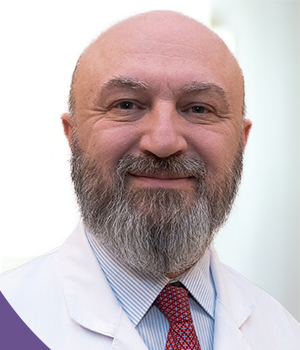
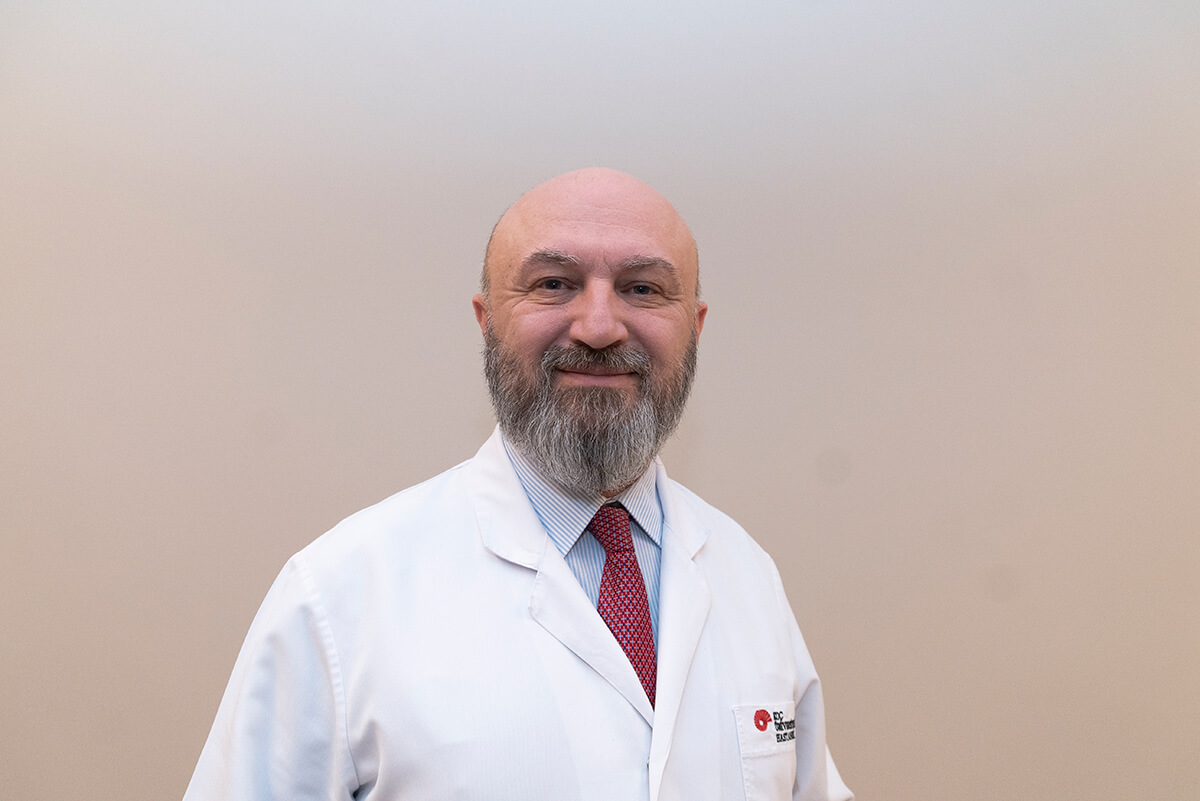
"I consider myself fortunate to have had the opportunity to work with five of the six radiotactic surgery systems and have witnessed how improvements over the years have confirmed the clinical relevance of the methodology, proving it to be the 'gold standard' in brain neurosurgery."
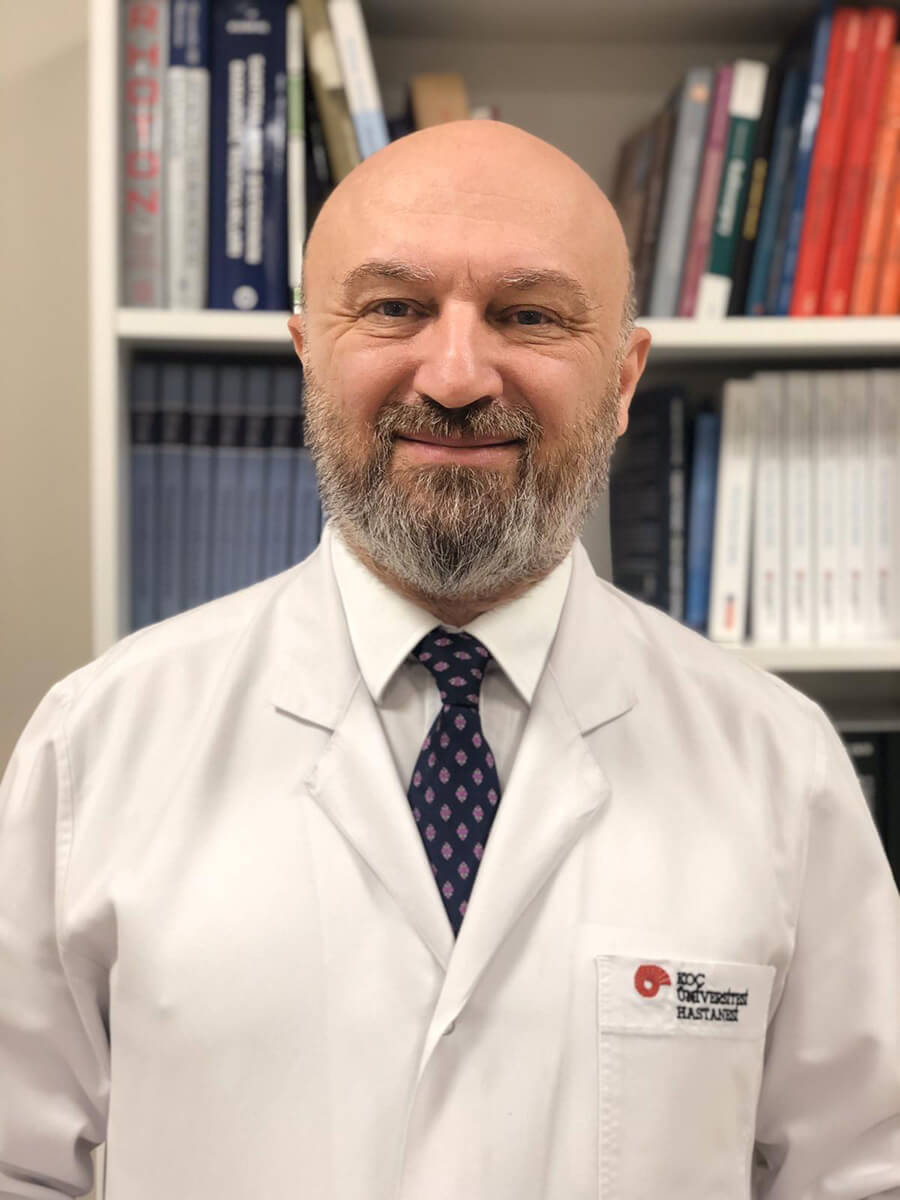
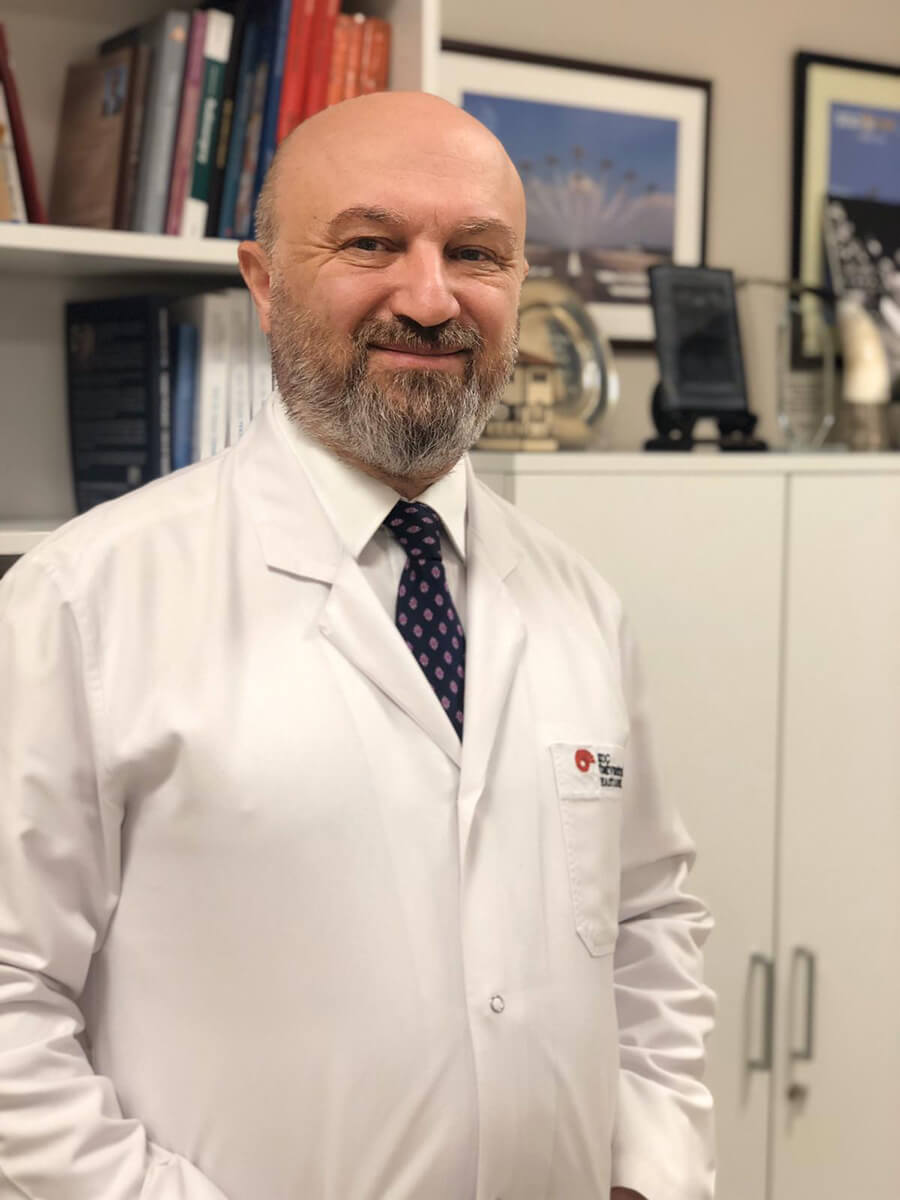
These are the words of Prof. Dr. Selcuk Peker, Head of the Department of Neurosurgery at KOC University Hospital, and the first neurosurgeon to apply treatment with the latest Gamma-Knife model in Turkey.
Which diseases are the main object of treatment in the practice of Prof. Dr. Selcuk Peker?
- arterio-venous malformations (aneurysms, fistulas)
- movement disorders and tremor in Parkinson's patients
- patients with benign and malignant brain tumours
- trigeminal and phlossopharyngeal neuralgia
- epilepsy
- pituitary tumors
- vestibular schwannomas
- hemangioblastomas
- craniopharyngiomas
- chordomas, cavernomas, metastases
- uveal melanoma
- hemangiopericytoma (a rare tumor arising from the blood vessels and soft tissues)
- pediatric neurosurgery (craniosynostosis, cerebrospinal tumors, pediatric spinal cord diseases, spina bifida cystica, diastematomyelia, tetra-cord syndrome, etc.)
In which conditions Prof. Selcuk Peker uses Leksell Gamma Knife?
- benign and malignant brain tumours
- arterio-venous aneurysms, fistulas
- trigeminal neuralgia
- vestibular schwannoma
- pituitary tumors
What is a Leksell Gamma Knife?
This is an advanced form of radiosurgery, also called radiotactic radiosurgery, aimed at treating tumors, malformations and other abnormalities in the brain.
Although it may sound like a surgical intervention, it is important to highlight one of its advantages that Gamma Knife Therapy is a bloodless procedure that does not require a hospital stay.
Unlike traditional radiation therapy, which exposes the entire brain to low doses of radiation over several sessions, radiosurgery with Gamma knife uses multiple beams simultaneously, directed only at the target area, without irradiating surrounding healthy structures. The radiation source is called Cobalt-60, and approximately 200 beams of radiation are focused on the target area from multiple different angles.
Principle of action
The principle of action was invented so that each of the beams would be of low dose, and by uniting at a single point, the force would be powerful enough to destroy the pathological target area. In this way, adjacent healthy structures remain unharmed. This allows the delivery of a high dose of radiation in a single procedure, reducing the number of sessions required as well as the unpleasant side effects.
Gamma Knife uses specialized computer software to plan treatment and assist specialists in precisely designing and irradiating target tumor areas in the head. An additional aid to precision is the stabilizing head frame, which is attached via 4 surface-mounted head pins. It stabilizes the patient's head during the procedure by serving as a reference point when scanning the target area in the brain.
Before starting the procedure with a gamma knife:
Investigations such as angiography or MRI can be carried out to give even more precise information about where the radiation should be projected and at what dose. The information from the scan is fed into Gamma Knife's computer system, which calculates the area and dose for radiation. This process can take 1-2 hours, during which the patient can settle into the office to relax and adjust for the procedure.
The device is similar in appearance to a CT scanner. The examination is carried out in the same way: the patient is invited to lie on the table, after which the table will be positioned so that the patient's head is positioned in the dome. The stabilizing G-frame placed on the patient's head is attached to the dome so that movements are minimized.
The patient is conscious the whole time, and there is an intercom in the dome through which he can talk to the doctor. If the patient is anxious, mild sedation can be administered to aid relaxation. When a gamma knife is used on children, anesthesia is administered to eliminate unnecessary movement during the procedure.
The time required to perform the procedure can vary from less than an hour to about four hours, depending on the size and shape of the targeted pathological area.
Why Prof. Selchuk Pecker, and the newest - LEKSELL GAMMA KNIFE ICON Gamma Knife superior to the others?
As already mentioned, Prof. Selcuk Peker is proficient in 5 of the 6 methods of radiosurgery, his favorite being the most innovative Leksell Gamma Knife Icon.
The improved model allows the fabrication of a customized protective face mask , replacing the stabilizing G- head frame. In this case, the need to numb the scalp to position the pins and improve patient comfort is avoided.
Another improvement of the system is the increased precision with which the specialist treats the target area - a precision of up to 0.15 mm, which is the width of 2 human hairs.
A third, very important point is the development of the possibility of delivering less dosed radiation, which allows the radiation to be divided into several sessions in so-called fractional radiosurgery. In this way, the specialist can tailor the treatment to the individual case by reducing side effects.
Possibility of applying a frameless procedure.
This Gamma Knife model can perform the procedure without a frame, in cases where a craniotomy was performed with incisions near the pin site or in the case of Botox for aesthetic reasons.
For frameless treatments, Icon's integrated cone beam (similar to an X-ray beam) workflow allows Prof. Pecker to track the patient's position relative to the planned image. After fitting the thermoplastic mask to the patient's head, an initial radiograph is taken to obtain a baseline image, which is then fused with the MRI image. This creates an overall image that allows a plan to be drawn. The patient's movement during a frameless Gamma Knife Icon session is captured by a high-resolution motion control system. An infrared beam picks up the target fabrics and monitors head deviation from the main direction. Users have the option of active or passive control of this system.
The Leksell Gamma Knife Icon enables active or passive control by the operator.
In active control, a range of motion is entered, and in the event that the patient's head movement exceeds this threshold, the system automatically stops delivering radiation. The passive mode puts the control in the hands of the operator and he decides when to cut off the radiation.
Some other advantages of Gamma Knife over standard radiotherapy:
- Leksell Gamma Knife Elekta reaches tumors or other brain abnormalities localized so that they cannot be treated by standard neurosurgery.
- It can be used when the patient is not in good general health to undergo standard surgery.
- In children, avoiding the mental stress and post-traumatic shock of multiple standard radiotherapies.
- As previously mentioned, a gamma knife does not require scalp incisions or openings of the cranial membranes, nor dissection of brain tissue. Furthermore, the procedure is usually performed once unless the stage of the disease requires several more procedures.
- The effect of 1-3 Gamma Knife treatments is equivalent to about 30 sessions of conventional radiotherapy.
- No hair removal is necessary.
When using a gamma knife on children, anesthesia is administered to eliminate excess movement during the procedure.