
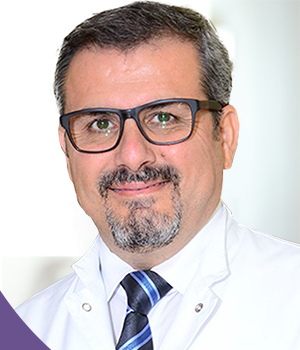
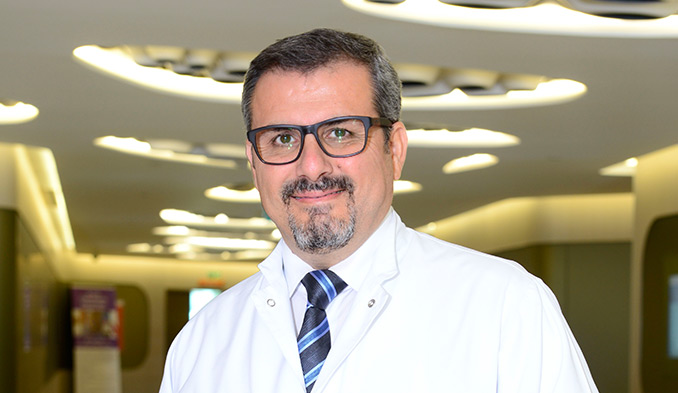
Проф. д-р Ердал Карайоз - визитка

Prof. Dr. Erdal Karayoz

Prof. Phd. Erdal Karaöz

BRIEF INFORMATION:
Specialist:
regenerative medicine

CV and professional development

Образование и академични степени

  • Магистър по хистология и ембриология – Университет Дичле, 1989 г.

  • Докторска степен (PhD) по хистология и ембриология – Университет Гази, 1994 г.

  • Доцентура – Университет „Сюлейман Демирел“, 1996 г.

  • Професура – Университет „Сюлейман Демирел“, 2002 г.

  • Професура – Център за стволови клетки и генни терапии, Университет Коджаели, 2003–2014 г.

  • Професура – Университет Истинйе, Медицински факултет, 2016–2022 г.

Professional experience

  • Liv Hospital (Истанбул) – директор на Центъра за регенеративна медицина и производство на стволови клетки (2014 – до момента).
  • Университет Истинйе – професор по хистология и ембриология; вицеректор (2016–2019); ръководител на център по стволови клетки и тъканно инженерство (2017–2021).
  • Университет Коджаели – професор и директор на Центъра за стволови клетки и генни терапии (2006–2014).
  • Harvard Medical School – Joslin Diabetes Center (Бостън, САЩ) – гост-изследовател (2005).
  • Университет „Сюлейман Демирел“ – доцент и професор по хистология и ембриология (1996–2003).
  • GATA, Медицински факултет – специалист по хистология и ембриология (1989–1996).
  • Университет Дичле – асистент по хистология и ембриология (1986–1989).

Memberships and publications

  • Член на Асоциацията по хистология и ембриология (1997).
  • Член на Нюйоркската академия на науките (1997).
  • Член на Асоциацията по стереология (1999).
  • Член на Турската асоциация по електронна микроскопия (2000).
  • Euroscience, активен индивидуален член (2000).
  • Член на Турската хематологична асоциация (2009).
  • Член на Европейската хематологична асоциация (2009).
  • Член на Асоциацията за молекулярно изследване на рака (2009).
  • Член на Европейската асоциация за изследване на рака (EACR) (2009).
  • Член на Международното дружество по клетъчна медицина (2010).
  • Асоциация за трансплантация на органи, тъкани и клетки (член на Изпълнителния съвет, (2013-2014).
  • Асоциация за терапии със стволови клетки и клетки (член на Изпълнителния съвет, президент, 2013-април 2016).
  • Асоциация за терапии със стволови клетки и клетки (член на Изпълнителния съвет, вицепрезидент, април 2016).

Публикации и научни приноси

  • Автор на над 180 научни публикации в международни рецензирани списания.

  • Статиите му са цитирани над 3 600 пъти, с индекс на Хирш (h-index) 26, което отразява значим принос в областта на регенеративната медицина и клетъчната терапия.

  • Участва в множество клинични проучвания (фаза I) за приложение на мезенхимни стволови клетки при:

    • хронично гръбначномозъчно увреждане,

    • травматично мозъчно увреждане,

    • миокарден инфаркт,

    • аутизъм,

    • хипоксично-исхемична енцефалопатия.

  • Научните му изследвания са публикувани в престижни списания, включително:
    Stem Cell Research & Therapy, Stem Cell Reviews and Reports, Journal of Cellular and Molecular Medicine, Tissue Engineering and Regenerative Medicine, Archives of Oral Biology, Turkish Journal of Hematology et al.

Научна и рецензентска дейност

  • Ръководител и съавтор на повече от 40 международни изследователски проекта.

  • Активен рецензент в над 30 международни научни списания в областта на клетъчната биология и регенеративната медицина.

Clinical areas of interest

Неговата клинична и научна дейност е насочена към прилагането на съвременни клетъчни технологии за лечение на:

  • Neurological diseases – аутизъм, епилепсия, множествена склероза, детска церебрална парализа, травми на главния и гръбначния мозък, хипоксично-исхемична енцефалопатия.

  • Мускулни и ортопедични заболявания – мускулна дистрофия, увреждане на ставния хрущял, артроза, спортни травми (вкл. тенис лакът).

  • Автоимунни и възпалителни заболявания – ревматоиден артрит, болест на Крон, хронични възпалителни процеси.

  • Metabolic diseases – захарен диабет и усложнения като диабетно стъпало.

  • Pulmonary diseases – хронична обструктивна белодробна болест (ХОББ), пост-COVID увреждания.

  • Офталмологични заболявания – оптична невропатия, дегенеративни заболявания на ретината и зрителния нерв.

  • Кардиологични заболявания – миокарден инфаркт, сърдечна недостатъчност.

Наред с клиничната практика, проф. д-р Караоз развива и научни изследвания в областта на клетъчната терапия, стволовите клетки, тъканното и органно инженерство, генните терапии, 3D биотехнологиите и CRISPR-Cas9.

Additional information

Проф. д-р Ердал Карайоз - превю

Prof. Dr. Erdal Karayoz

What methods of treatment does prof. Karayoz in his practice?

There are two different methods of stem cell treatment:

  • Allogeneic - the patient receives stem cells from a suitable donor.
  • Autologous - the patient receives their own.

Prof. Karayoz - methods for allogeneic cell implantation:

  • Allogeneic umbilical cord-derived mesenchymal stem cell MSCs - MSCs have the ability to differentiate into three germ layers, accumulate in damaged tissue or inflamed areas, promote tissue repair, and modulate the immune response. This cell type has many advantages. Mesenchymal stem cells (MSCs) form the group of stem cells that are most commonly used in clinical practice. Much research is being conducted on their regenerative characteristics and it is clear that they have a beneficial effect on the repair processes of many damaged tissues. MSC are used in clinical trials because of their self-regeneration anddifferentiation abilities, their role in tissue repair, and their immunosuppressive and neuroprotective effects.
  • Allogeneic cultured placentas derived from multipotent mesenchymal stromal cells - Using this type of stem cells, one can achieve: improving endothelial function, stimulating angiogenesis and activating the body's own regenerative potential of its own stem cells.

Prof. Karayoz - Methods for autologous cell implantation

  • Stromal Vascular Fraction (SVF)

SVF is derived from the patient's own adipose tissue. Adipose tissue is a rich and very convenient source of stem cells for therapeutic approaches in regenerative medicine. The stromal vascular fraction is a cell extract that is obtained in the laboratory from the body's own fat. SVF cells are obtained by liposuction and contain multiple cell types, including adipose-derived stem cells (ADSCs), mesenchymal and endothelial progenitor cells, leukocyte subtypes, lymphoid cells, pericytes, and vascular smooth muscle cells. SVF cells are processed such that they contain a reproducible and consistent composition of heterogeneous cells. When processed and administered, adipose tissue-derived SVF cells can differentiate into different tissue types, maintain neovascularization, replace cells, and repair traumatic problems.

  • Autologous chondrocyte implantation (ACI)

In this method, mesenchymal stem cells are isolated from the patient's own cartilage tissue. Autologous implantation is a relatively new, advanced procedure used to treat isolated articular cartilage defects of the knee. ACI is also performed for patella (knee cap) defects. Autologous chondrocyte implantation is a two-stage surgical procedure.

First procedure

The first procedure is performed arthroscopically in less than 30 minutes. The surgeon takes a small piece of articular cartilage from the patient's knee. This cartilage biopsy is then sent to a lab where it is enzymatically processed to isolate chondrocytes, which are the cells that produce cartilage. Once these chondrocytes are obtained, they are sent back to the surgeon approximately 6 to 8 weeks later for implantation.

Second stage

The second-stage surgery is an open procedure in which a small patch is sewn over the plastic cartilage defect. The chondrocytes that are collected are injected under this patch, where they adhere to the patient's knee to form what is called hyaline-like cartilage, which resembles the joint's own cartilage. After implantation, there is a period of limited loading for up to 8 weeks. During this time, physical therapy is prescribed to improve range of motion and muscle strength. The surgeon may also recommend the use of robotic passive rehabilitation to ensure the success of the procedure. Return to light sports activities is usually allowed after approximately 6 months with return to full sports activities between 9 and 12 months after the procedure. The overall success rate of ACI is approximately 85%.

How do Prof. Dr. Erdal Karayoz and his colleagues apply stem cells?

Intravenous injection

Based on clinical data and research, stem cells cross the blood-brain barrier when injected systemically.

Procedure

The intravenous delivery method is a very simple process. A catheter is inserted into the patient's vein. Usually, sedation is not required for this procedure. The entire process of intravenous injection of stemhas less than 45 minutes.

Lumbar puncture

Procedure

This is a procedure used to access the cerebrospinal fluid of the brain and spinal cord and helps deliver stem cells directly into the cerebral spinal fluid, bypassing the blood-brain barrier. This is the least invasive method of delivering stem cells directly into the central nervous system.

Intramuscular and intra-articular injection of stem cells

Stem cells are injected directly into the injured muscle or joint.
Work streams:

Part of the team:

Болница Лив 002

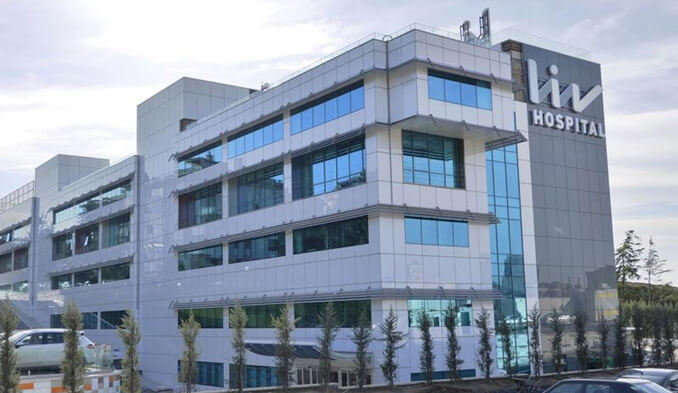
Liv Hospital

Liv Hospital's mission is to improve the health of all our international patients by setting the standard of excellence in personalized patient care.

Last viewed in section
"Doctors."

Pin It on Pinterest

Shares
Share This

Register

  • Enter username. It can NOT be changed after creating the account.
  • Please enter email
  • To make sure you don't get confused when typing, please repeat your email again.
  • Enter your password. Minimum length of 8 characters.
    The password must have a minimum strength of Medium
    Strength indicator
  • Enter your password again.
  • Please accept our terms of use. You can read them here.

Request an appointment

Login to your account:

If you don't have a registration don't hesitate - register. You will be able to comment without hindrance.

Our offices at home and abroad:

Head office Sofia:

Str. General Ivan Kolev, 33 B Bulgaria, Sofia

Plovdiv office:

Blvd. Hristo Botev 92, RILON Business Centre, floor 2 Bulgaria, Plovdiv

Област Пловдив

Office Burgas:

Str. Ivan Vazov 75 Bulgaria, Burgas 8000

Офис Стара Загора:

ул. Захари Княжески 2,
България, Стара Загора

Shumen Office:

Str. Panayot Volov No.2 Bulgaria, Shumen.

Macedonia Office:

Bane Andreev Ronkata #2, 1400 Veles, Macedonia